Every delayed construction project has a reason.
Sometimes it is labour shortages. Sometimes it is material availability.
But on many high-rise construction sites, delays begin much earlier during tower crane planning.
A crane positioned a few metres off its optimal location can increase lifting cycles throughout the project. An underestimated hook height may require additional climbing stages. Poor coordination between crane positioning, material storage, and building progression can create bottlenecks that affect every trade working on site.
These problems rarely appear during the first few weeks of construction. They usually become visible only after the structure starts rising, when correcting them becomes significantly more expensive.
Across high-rise developments in Mumbai, Pune, NCR, Bengaluru and Hyderabad, experienced EPC contractors now treat tower crane planning as part of the overall construction strategy rather than an equipment decision. The objective is no longer simply selecting a crane. It is ensuring the crane supports every stage of construction from foundation work to final dismantling without disrupting productivity.
This guide explains the most common tower crane planning mistakes that delay construction projects and how experienced project teams avoid them before work begins.
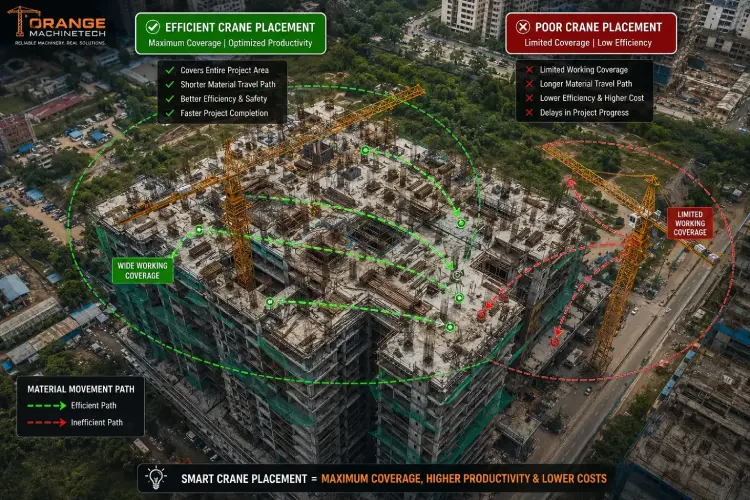
One of the biggest planning mistakes happens before the crane even arrives.
Some projects finalise crane specifications based only on lifting capacity or equipment availability without first analysing:
A tower crane should never be selected in isolation.
Instead, experienced planning teams first develop the construction logistics plan and then choose the crane that fits those operational requirements.
Projects evaluating tower crane for sale options during the planning stage often compare hook height, jib length and operational radius against future project requirements instead of only considering maximum lifting capacity.
A crane that performs well during the first six months of construction may become inefficient once the project reaches higher floors.
Common planning oversights include:
Planning only for today's building height often creates tomorrow's delays.
Experienced EPC contractors map the crane's entire lifecycle before erection begins, including climbing stages, tie positions and dismantling methodology.
This long-term approach is one reason many teams prepare detailed tower crane planning for high-rise projects before equipment mobilisation.
Every unnecessary crane movement consumes time.
Poor positioning often results in:
Although each delay may appear minor, the cumulative effect over thousands of lifts can significantly extend project timelines.
Rather than positioning the crane near available space, experienced planners place it where the highest percentage of daily lifting operations can be completed with minimum movement.
This improves productivity throughout structural construction.
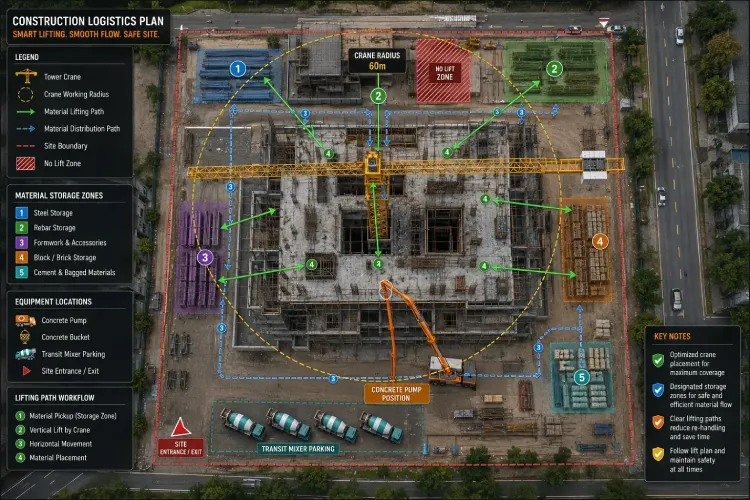
Construction sites rarely become less crowded.
As projects progress, additional activities begin simultaneously:
A crane layout that works during excavation may become highly restrictive at level twenty.
Modern high-rise projects therefore forecast congestion months in advance rather than reacting after delays occur.
Where multiple cranes operate together, planners also evaluate swing conflicts, restricted zones and lifting priorities to reduce operational interruptions.
Tower cranes influence almost every activity on site.
Yet planning is sometimes carried out independently from:
When departments work separately, cranes often become the project's biggest bottleneck.
Leading EPC contractors now integrate crane planning directly into construction scheduling so lifting capacity aligns with concrete pours, reinforcement delivery, formwork movement and façade installation.
This coordinated approach is becoming increasingly common in large commercial and infrastructure developments across India.
Choosing the lowest equipment cost does not always produce the lowest project cost.
Before deciding between ownership and hiring, project teams also evaluate:
For some developments, a tower crane on rent provides greater flexibility. Others benefit from purchasing equipment for long-term utilisation.
The decision should support the construction programme rather than being driven solely by initial cost.
During the planning of two residential towers with a shared podium, the original crane layout positioned both cranes too close to the centre of the development.
While structural work progressed successfully, façade installation created overlapping lifting zones that reduced productivity during the final stages.
After revising the lifting sequence and introducing dedicated material delivery windows, waiting time between trades reduced significantly without changing crane capacity.
The issue was never the crane itself.
It was the original planning assumptions.
This illustrates why experienced project teams review crane strategy throughout the project rather than treating it as a one-time engineering exercise.
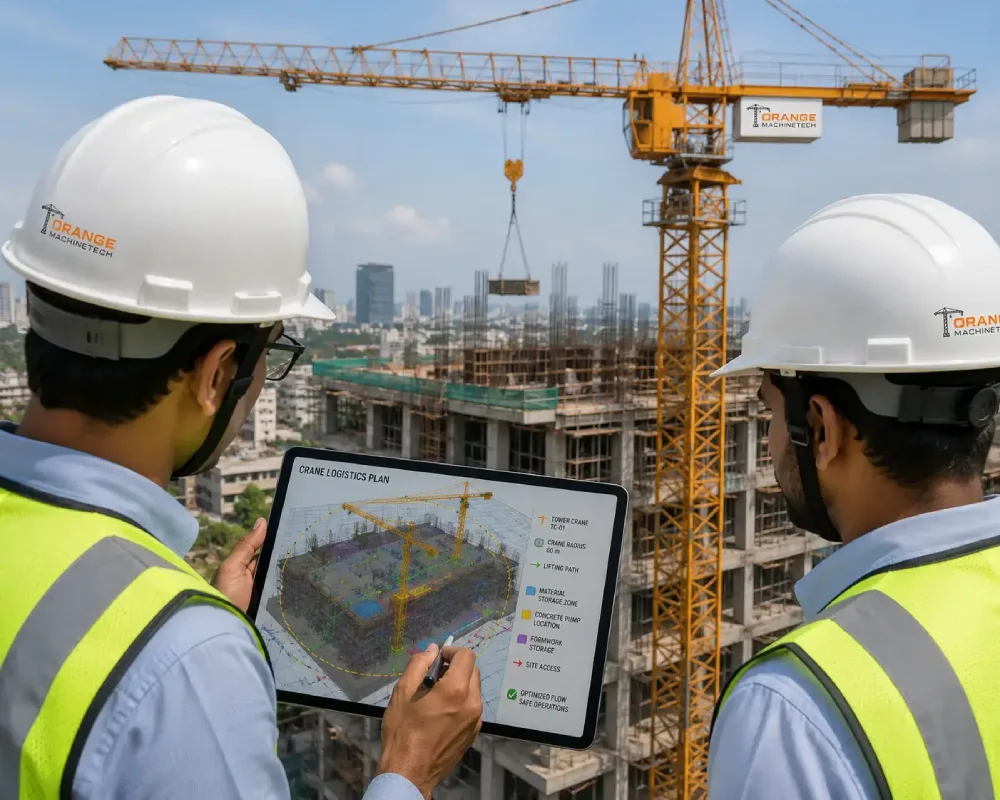
Projects that consistently achieve smoother execution usually share several planning practices:
Rather than solving lifting problems during construction, these teams reduce the likelihood of those problems occurring in the first place.
For projects comparing lifting strategies, reviewing how tower cranes compare with mobile cranes can also help determine whether a fixed crane is the most efficient solution for the site's construction sequence.
Selecting a crane before completing a detailed site logistics and lifting study.
Yes. Poor positioning increases lifting time, travel distance and coordination delays across multiple trades.
During early project planning, before structural construction starts and before crane procurement.
Yes. Delays, additional climbing, repositioning and inefficient material movement can significantly increase overall construction costs.
Successful tower crane projects begin long before the crane is erected.
The biggest delays rarely result from equipment failure. They usually originate from planning decisions made during the earliest stages of the project.
By considering lifting requirements, building progression, congestion, logistics and future dismantling together, EPC contractors can improve productivity while reducing avoidable disruptions.
As high-rise construction across India continues to become more complex, tower crane planning is evolving from an equipment decision into a project management discipline.
Projects that invest time in getting it right at the beginning are usually the ones that finish more efficiently.
Whether you're evaluating tower cranes for sale for long-term deployment or exploring tower crane rental solutions for a specific project, planning the right lifting strategy early can improve productivity, reduce delays, and support safer construction throughout the project lifecycle.