Choosing the right lifting equipment can directly impact construction efficiency, project timelines, and operational costs. Among the most widely used lifting solutions in modern construction are tower cranes and mobile cranes.
While both serve the purpose of lifting heavy loads, their design, capacity, mobility, and ideal applications differ significantly.
Contractors, EPC firms, and project planners often ask:?
This guide explains the difference between tower cranes and mobile cranes, helping project teams choose the right equipment for their site conditions and lifting requirements.
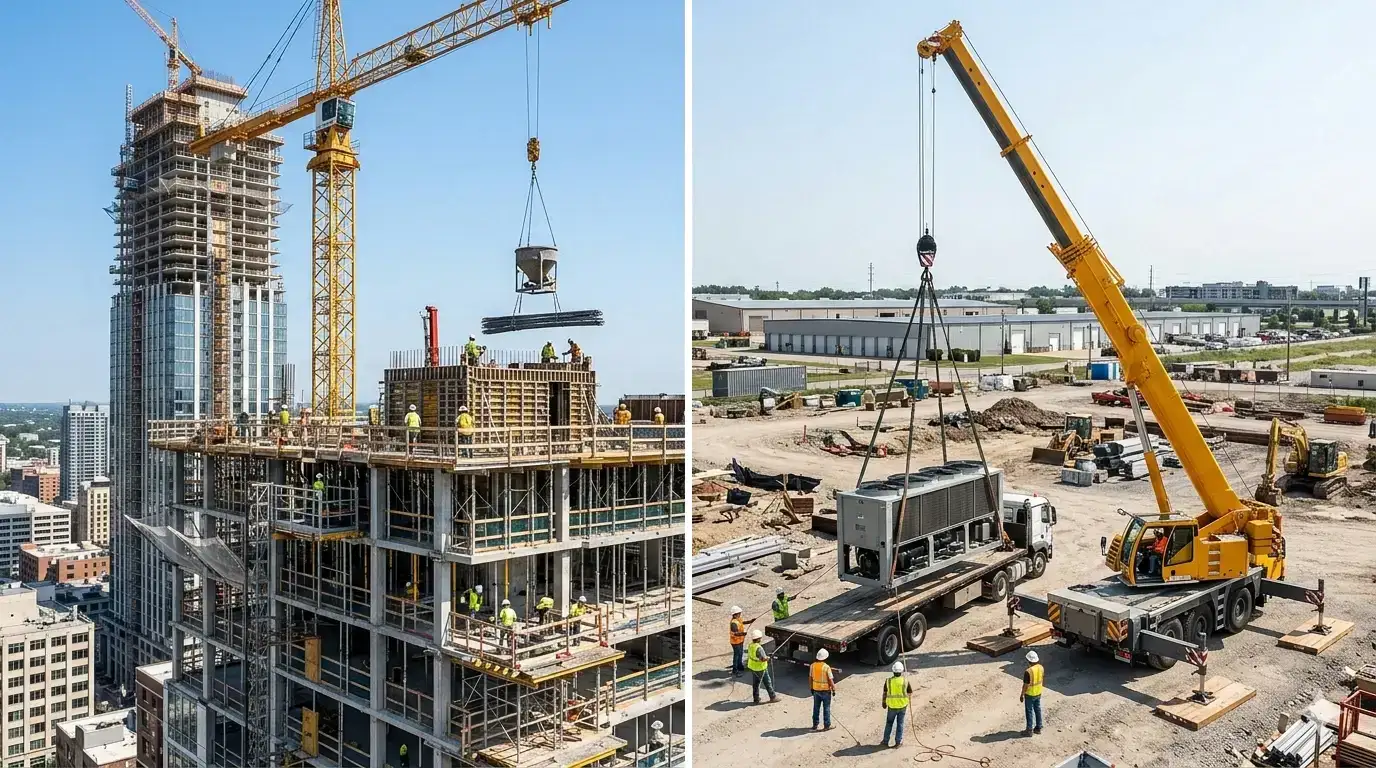
In real-world construction planning, the decision between a tower crane and a mobile crane is rarely based on lifting capacity alone. Project height, site congestion, lifting frequency, and construction timelines all influence the final equipment selection. Experienced contractors typically evaluate these factors early in the planning phase to ensure the crane type supports both operational efficiency and site safety.
Tower cranes are fixed lifting systems designed for large-scale construction projects, particularly high-rise buildings, commercial complexes, and infrastructure developments.
Once installed, they provide exceptional lifting height, reach, and stability, making them ideal for projects requiring continuous material handling.
Typical applications include:
Modern projects often use advanced crane systems such as luffing tower cranes, which are specifically designed for congested urban construction sites where space is limited.
These cranes offer vertical lifting efficiency with reduced swing radius, making them ideal for dense city developments.
Mobile cranes are versatile lifting machines mounted on wheeled or crawler platforms, allowing them to move easily between job sites.
Unlike tower cranes, they do not require permanent installation, which makes them suitable for projects where lifting requirements are temporary.
Mobile cranes are commonly used for:
Their key advantage lies in mobility and quick setup, allowing contractors to deploy them across multiple project locations.
One of the biggest differences between the two crane types is lifting height.
Tower cranes are designed to reach extreme heights, making them essential for multi-story construction projects. They can lift materials vertically while maintaining stability even at great heights.
Mobile cranes, while powerful, typically have limited height capability compared to tower cranes.
For projects involving skyscrapers or tall structures, tower cranes are usually the preferred solution.
Contractors often rely on tower crane solutions for high-rise construction to ensure stable and efficient lifting operations.
Tower cranes offer consistent load capacity across long working cycles, making them ideal for repetitive lifting tasks during large construction projects.
Their fixed base structure provides superior stability, which is critical when lifting heavy building materials such as steel beams, concrete buckets, or prefabricated components.
Mobile cranes, on the other hand, rely on outriggers and balancing systems to maintain stability during lifting operations.
This is where mobile cranes have a clear advantage.
Mobile cranes can move between different locations within the project site or even across multiple projects, providing operational flexibility.
Tower cranes are installed in a fixed position, meaning they are designed to support long-term construction operations rather than temporary lifting tasks.
Tower cranes require careful planning and professional installation, including:
Because of this, they are typically used for long-term construction projects.
Mobile cranes require minimal setup, allowing contractors to begin lifting operations almost immediately after arrival.
Feature |
Tower Crane |
Mobile Crane |
|---|---|---|
| Mobility | Fixed installation | Highly mobile |
| Ideal Use | High-rise construction | Short-term lifting |
| Setup Time | Longer installation | Quick deployment |
| Lifting Height | Very high | Moderate |
| Best For | Large construction projects | lexible lifting tasks |
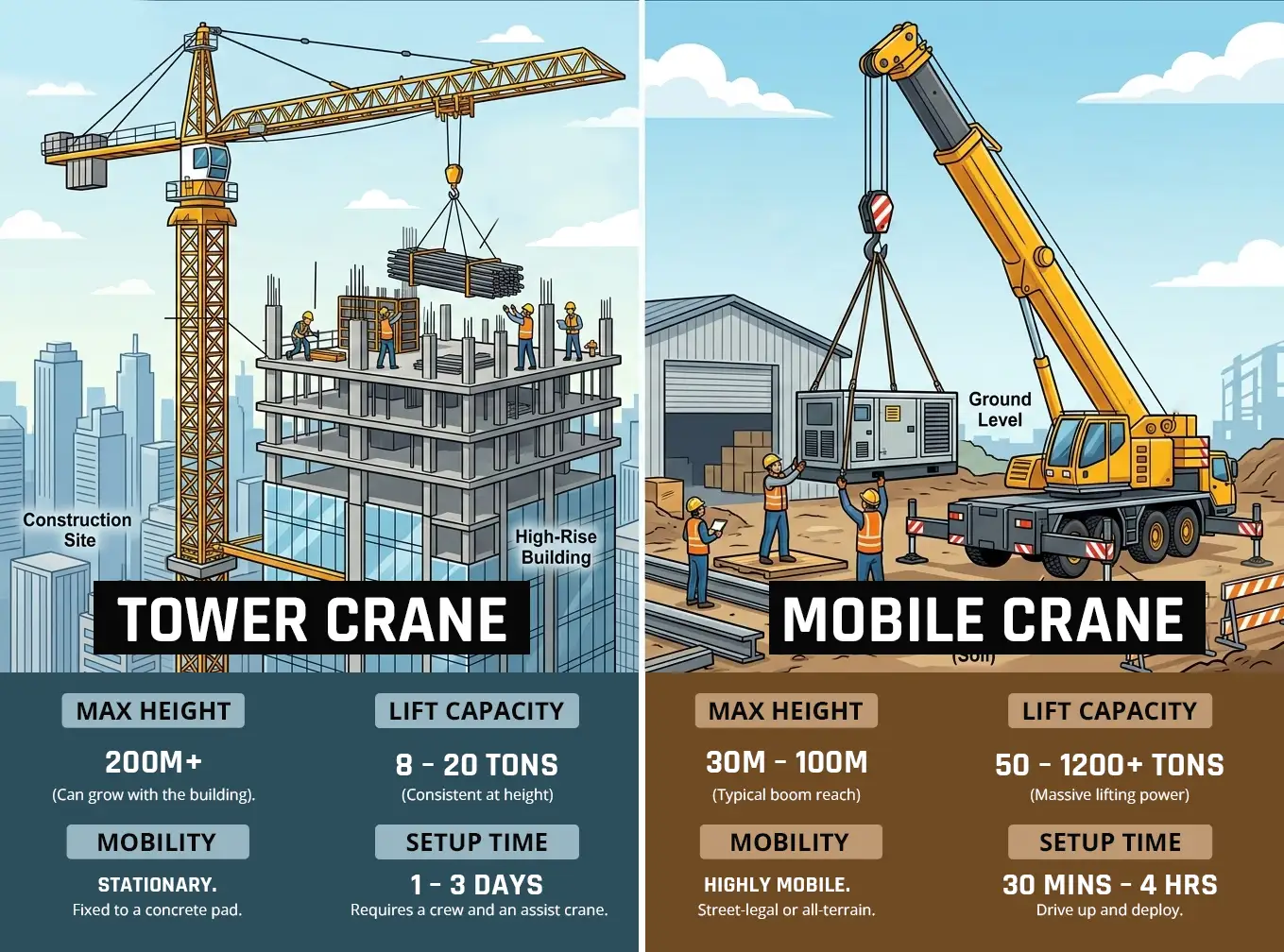
Tower cranes are the preferred choice when a project involves:
They provide greater lifting height, stability, and operational efficiency for large construction developments.
For example, many urban construction sites today rely on specialized lifting equipment such as a luffing tower crane, which helps manage lifting operations safely in tight city environments.
Mobile cranes work best when the project requires:
They are particularly useful for maintenance operations, industrial installations, and infrastructure repairs.
From a cost perspective, the right crane depends on project duration and lifting requirements.
Tower cranes involve higher installation costs, but they become cost-efficient for long-term projects due to their ability to handle continuous lifting operations.
Mobile cranes may appear more affordable initially, but for large construction projects requiring daily heavy lifting, repeated crane mobilization can increase operational costs.
Contractors often evaluate construction crane rental options, project timelines, lifting capacity, and site conditions before deciding which crane type offers better value.
Both crane types must comply with strict construction safety standards, but their operational safety depends on correct usage.
Tower cranes offer controlled lifting zones and predictable movement, which can improve safety on large construction sites.
Mobile cranes require careful positioning and ground stability assessments before lifting operations begin.
In modern construction environments, selecting the right crane type plays a significant role in improving project safety, efficiency, and material handling productivity.
There is no universal answer when comparing tower crane vs mobile crane.
The right choice depends on factors such as:
For large vertical construction projects, tower cranes usually provide the best long-term solution. For short-term lifting tasks , mobile cranes deliver greater flexibility.
Understanding these differences allows contractors to plan safer, faster, and more cost-efficient construction operations.
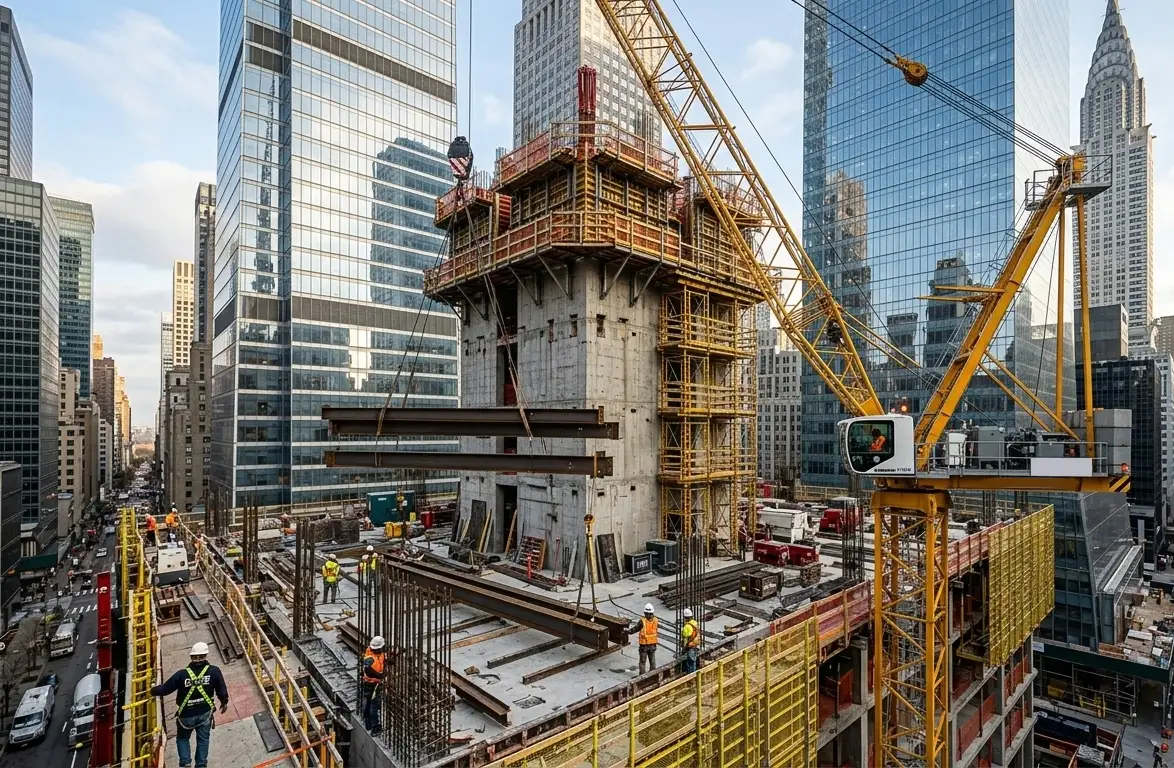
Both tower cranes and mobile cranes play an essential role in modern construction.
Tower cranes are designed for large, long-term building projects, offering superior height, reach, and lifting stability. Mobile cranes provide flexibility and mobility, making them suitable for temporary lifting requirements.
By evaluating project scale, lifting demands, and site constraints, construction teams can choose the equipment that delivers the best operational efficiency and project outcomes.