Tower crane planning for high-rise projects in India is no longer a late-stage logistics decision. For EPC contractors and developers, it is an early engineering exercise that directly influences construction sequencing, airspace coordination, safety approvals, and commercial predictability.
As urban projects in Mumbai, NCR, Pune, and Bengaluru rise taller and tighter, crane selection errors are no longer minor adjustments, they become structural constraints. A poorly positioned crane can slow pour cycles, disrupt façade logistics, create slewing conflicts, and trigger mid-project modifications that are expensive and disruptive.
The question is no longer:
Which tower crane is available?
It is:
Which tower crane configuration will remain efficient from podium to top-out?
This guide explains how experienced EPC teams approach tower crane planning for high-rise construction, aligning load, height, zoning, and long-term project phases.
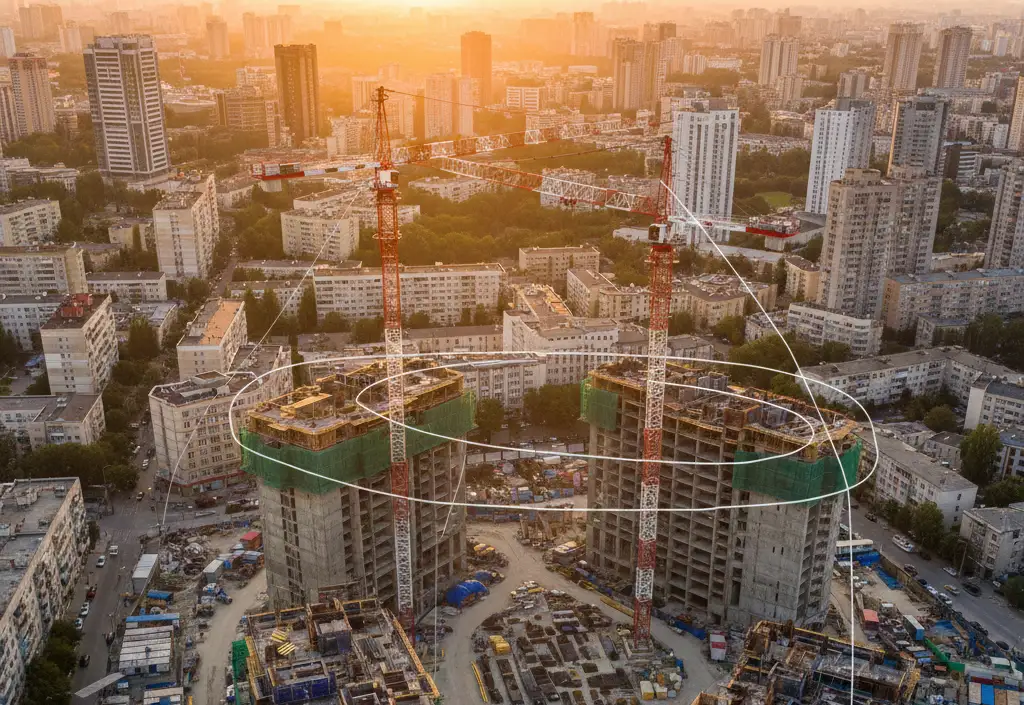
In fast-track construction environments, crane decisions impact:
When tower cranes are selected without considering final building height and congestion evolution, projects face:
Experienced planners now treat tower crane setup as a structural strategy, not procurement.
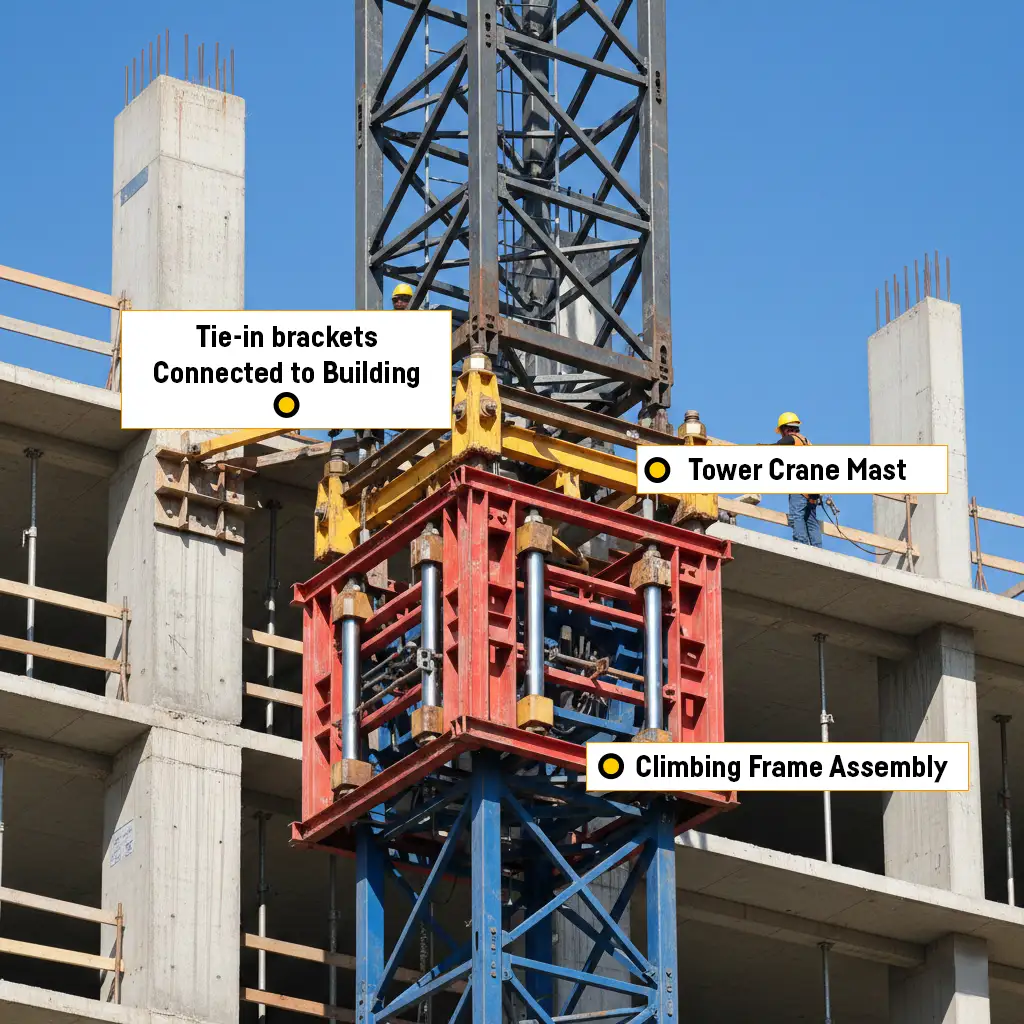
For high-rise projects, initial crane height is rarely the final height.
EPC teams evaluate:
A crane that works efficiently at 40 meters may become inadequate at 120 meters if tie placement and climbing sequences were not forecasted.
This is where planning mistakes compound.
High-rise tower crane planning must map:
If this sequence is not pre-engineered, mid-project improvisation becomes inevitable. On several 35+ storey urban projects, crane climbing stages often require structural reinforcement adjustments that were not accounted for during initial procurement. Early tie-in engineering prevents such reactive redesign.
Rated capacity charts often mislead inexperienced planners.
Real-world planning considers:
Instead of focusing on maximum capacity at minimum radius, EPC teams analyze:
In dense projects, required lifts often occur near the outer reach of the jib. If the crane cannot safely handle loads at that radius, productivity drops and waiting cycles increase.
When evaluating tower crane configurations for sale or rent, understanding operational radius is more important than headline tonnage.
Projects reviewing available tower cranes for sale configurations early in planning often avoid costly radius mismatches later in execution.
High-rise developments frequently operate with:
In such cases, zoning becomes critical.
Common mistakes include:
Where swing space is restricted, planners increasingly consider luffing crane configurations, especially in dense metro environments.
Luffing jib systems allow controlled radius adjustment, reducing airspace conflict. For high-density urban sites, reviewing manufacturer-supported luffing tower crane configurations during early planning prevents later structural redesign and airspace conflict in dense metro projects.
This shift toward vertical control instead of horizontal expansion is shaping modern high-rise crane strategy in India.
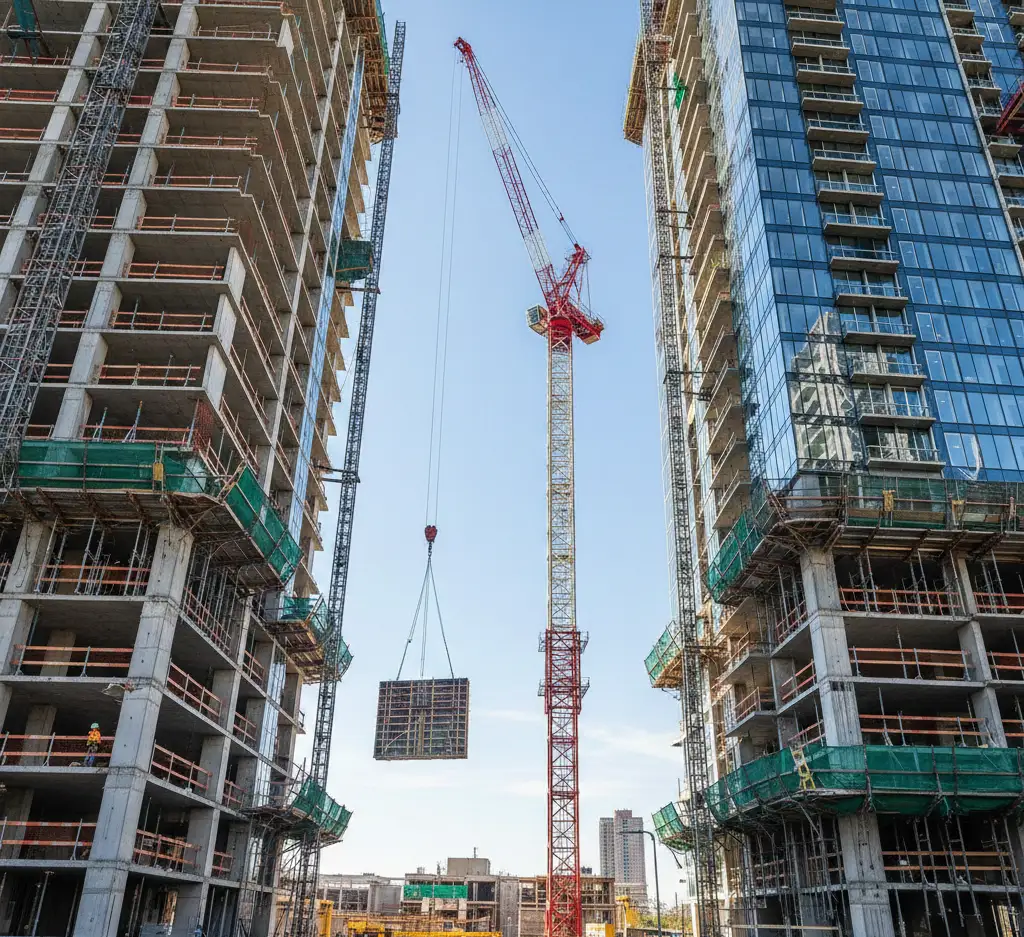
Tower crane planning is incomplete without structural coordination.
Key considerations include:
Foundation redesign mid-project is disruptive and expensive. Early structural collaboration between crane supplier and EPC design team reduces risk.
Projects that involve crane engineering support during early foundation design experience smoother erection and fewer structural conflicts.
High-rise cranes operate for long durations under sustained duty cycles.
Beyond specification, planners evaluate:
Support capability is increasingly weighted alongside equipment selection.
This is particularly relevant for projects choosing between purchase and rental models.
Teams comparing tower crane for sale options versus rental solutions typically evaluate:
Well-supported cranes maintain uptime through height progression, while poorly supported setups create cumulative delays.
Across Indian construction sites, recurring issues include:
The cost of repositioning or replacing a crane mid-project is significantly higher than investing time in early engineering validation.
As high-rise projects scale vertically, contractors increasingly prefer crane suppliers who:
This shift reflects a broader evolution in buying behaviour.
Cranes are no longer viewed as temporary enablers.
They are long-duration productivity infrastructure.
Large EPC projects now evaluate cranes based on:
This integration improves:
High-rise projects operating under compressed timelines benefit significantly from intelligent crane ecosystems.
Increasingly, EPC tenders now include requirements for load moment indicators, anti-collision systems, event logging, and audit-ready documentation. Crane selection is gradually becoming a compliance-driven decision, not just an operational one.
During early engineering and logistics planning, before structural execution begins.
Not necessarily. They are typically preferred in dense urban plots with airspace constraints.
Mismatch between projected building growth and crane height/radius planning.
Yes. Poor crane planning can affect sequencing, safety approvals, and overall project timelines.
Tower crane planning for high-rise projects in India is no longer a background decision. It is a strategic engineering exercise that shapes project tempo, safety exposure, and financial predictability.
Teams that approach crane setup as a long-term structural partner consistently avoid mid-project disruption.
In modern urban construction, the right crane strategy is often invisible, but its absence is immediately felt.
EPC teams planning upcoming high-rise projects can evaluate detailed tower crane sale and rental configurations aligned with height progression and urban zoning requirements before mobilization.