On a congested construction site, crane deployment is not simply a question of how high a crane can lift or how much weight it can handle. The available working envelope, neighbouring structures, lifting routes and future construction stages can determine whether a crane configuration is practical for the entire project.
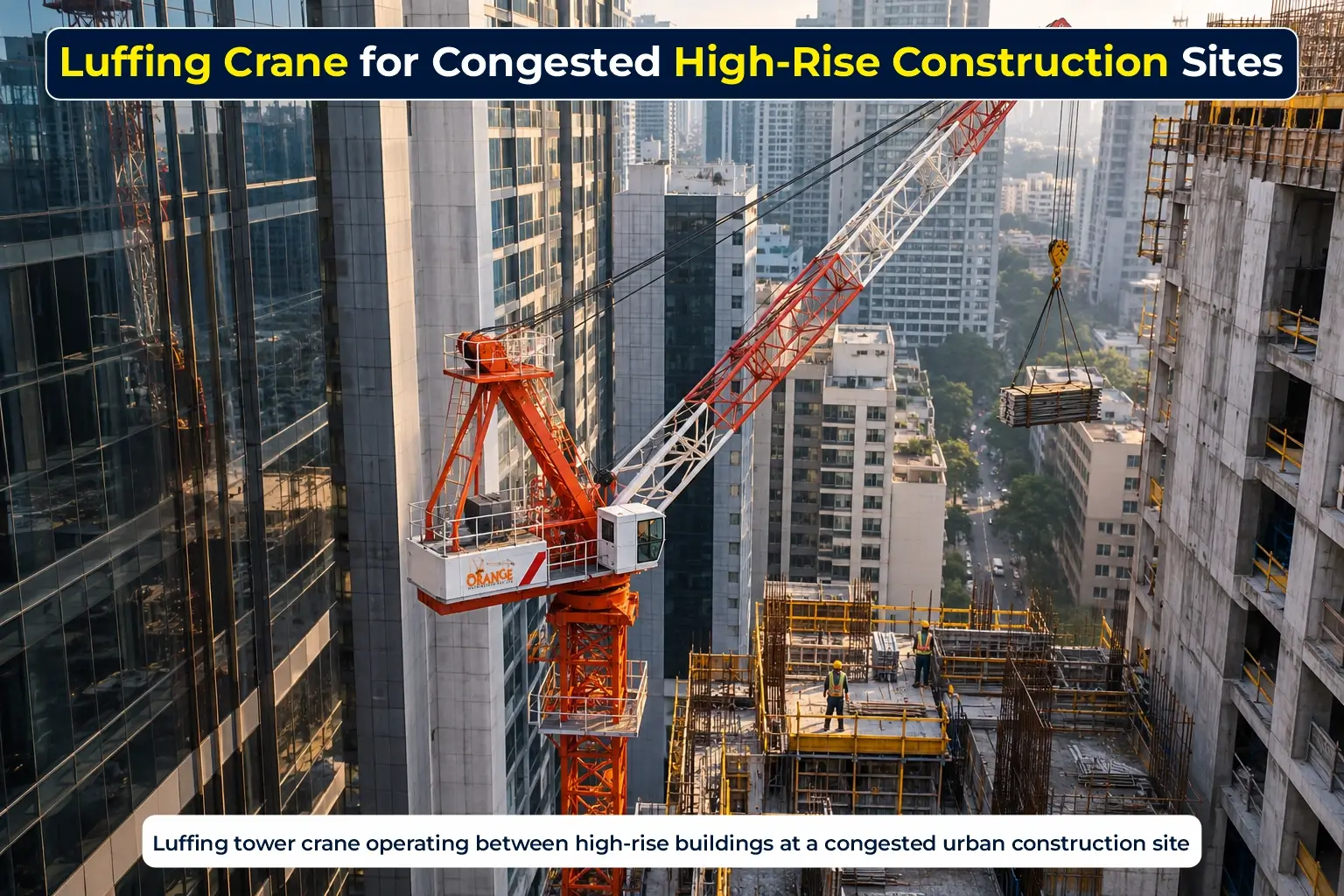
This is where a luffing crane becomes an important option. Its adjustable jib angle allows the working radius to be changed during operations, helping project teams manage restricted space and lifting requirements that may be difficult to accommodate with other crane configurations.
For EPC contractors and project planners, understanding luffing crane applications means looking beyond the equipment itself. The real decision is whether its operating characteristics suit the site's geometry, lifting sequence and safety requirements.
High-rise projects in cities such as Mumbai, Pune, Bengaluru and Delhi NCR often have limited space between the construction footprint and surrounding buildings. Roads, adjoining properties and existing infrastructure can restrict the area available for crane operations.
A luffing tower crane can be considered when the project requires controlled jib movement within a restricted working envelope. By raising or lowering the jib, the operator can adjust the working radius to suit different lifting positions, subject to the crane's approved operating limits.
This is particularly relevant when:
However, a luffing jib does not automatically eliminate oversailing or clearance concerns. The jib, counter-jib, tower, hook and suspended load must all be considered in the site assessment. The crane's actual operating envelope should be established before its position is finalised.
Metro construction sites frequently operate alongside live roads, railway corridors, stations, utilities and existing structures. These surroundings can make crane positioning and lifting routes more complicated than on an open construction plot.
A luffing jib crane may be suitable where the available space for jib movement is restricted and lifting operations need to be planned around fixed infrastructure.
For example, a project team may need to coordinate structural steel, formwork, reinforcement or mechanical equipment lifts without creating conflicts with nearby structures or other lifting equipment. The decision should consider more than the crane's maximum capacity. Planners need to assess the required lifting radius, load at that radius, hook height, foundation arrangement and access for erection and dismantling.
Where the site is close to an operating transport corridor, the lifting plan must also account for applicable permissions, exclusion zones and project-specific restrictions. A crane configuration should never be treated as a substitute for formal lifting and oversailing assessments.
Some of the most challenging lifts on a high-rise project take place after the main building structure is substantially complete. HVAC units, cooling equipment, facade components and other building services may need to be positioned on upper floors or rooftops.
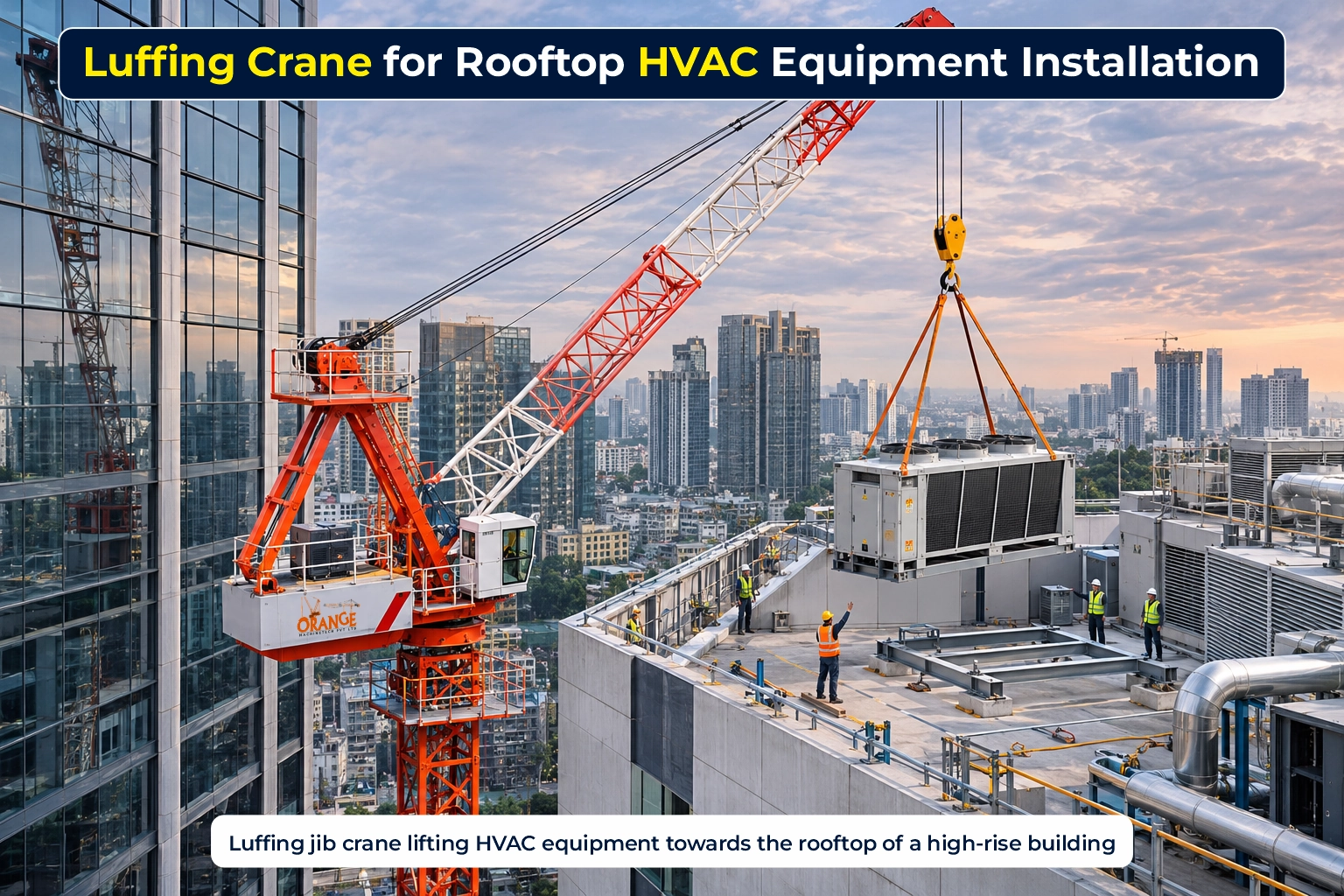
At this stage, access for mobile cranes may be restricted by surrounding buildings, road conditions, available setup space or the building's geometry.
A luffing crane can be evaluated for planned rooftop and upper-level lifting where its configuration, lifting capacity and working radius match the installation requirements.
Before selecting a crane for rooftop lifting, the project team should confirm:
A useful planning step is to prepare a lift schedule for major rooftop equipment before the crane is mobilised. This helps identify whether the crane configuration can handle the planned lifts without repeated changes to the lifting arrangement.
Dismantling a tower crane from a completed or nearly completed high-rise structure can present a different challenge from erecting it. The available access for a large mobile crane may be limited, particularly in dense urban locations.
In suitable project conditions, a smaller luffing crane can be considered as part of a planned dismantling arrangement. It may support the removal of selected crane components and equipment from elevated positions, depending on the dismantling sequence and the lifting capacity available at the required radius.
This application requires detailed engineering. The team must verify component weights, lifting points, rigging arrangements, access routes and the capacity of the dismantling crane throughout the sequence.
The dismantling method should also account for the building's structural limitations, temporary support requirements and the space needed to lower and remove components safely. The crane should be selected only after the complete dismantling plan has been reviewed by competent personnel.
Industrial facilities such as steel plants, cement plants, refineries and power projects may have congested operating areas, pipe racks, process equipment and overhead structures. During maintenance shutdowns, heavy components sometimes need to be removed or installed within these constraints.

A luffing crane may be evaluated where the lifting route and available working envelope make its adjustable jib useful. Potential applications include equipment replacement, structural component handling and selected maintenance lifts.
The key consideration is whether the crane can reach the required lifting points while maintaining the necessary clearances from existing plant and structures.
Shutdown schedules also leave little room for unplanned equipment changes. Therefore, the lifting study should be completed early, with component weights, access restrictions, lifting sequences and crane setup requirements verified before mobilisation.
The application alone does not establish whether a particular crane is suitable. A project-specific assessment should cover the following:
These checks help prevent a common planning mistake: selecting a crane that can perform the initial lifts but becomes difficult to operate as the building progresses.
A luffing crane is not automatically the right answer for every restricted site. Its suitability depends on the lifting schedule, working envelope, load requirements, structural arrangement and project duration. For contractors evaluating a luffing tower crane, the most useful starting point is a project-specific review of the major lifts and site constraints. This allows the crane configuration to be assessed against actual operating requirements rather than a single headline capacity figure.
Orange Machinetech manufactures and supplies luffing tower cranes for sale and rental, with configurations intended for high-rise, metro and space-restricted applications. Explore the available luffing cranes for sale and rent or contact the team to discuss your project's lifting requirements.
The right crane decision is made before mobilisation : when the lifting plan, site geometry and equipment configuration work together from the beginning.