A data center project can have a well-defined construction schedule and still experience delays when heavy materials cannot reach the required work zone on time.
From structural components and steelwork to mechanical systems and electrical infrastructure, data center construction depends on coordinated material movement. When deliveries, storage areas, lifting equipment and installation activities are not planned together, site congestion and waiting time can affect project progress.
For EPC teams, the challenge is not simply moving heavy materials. It is ensuring that the right load reaches the right location at the right stage of construction.
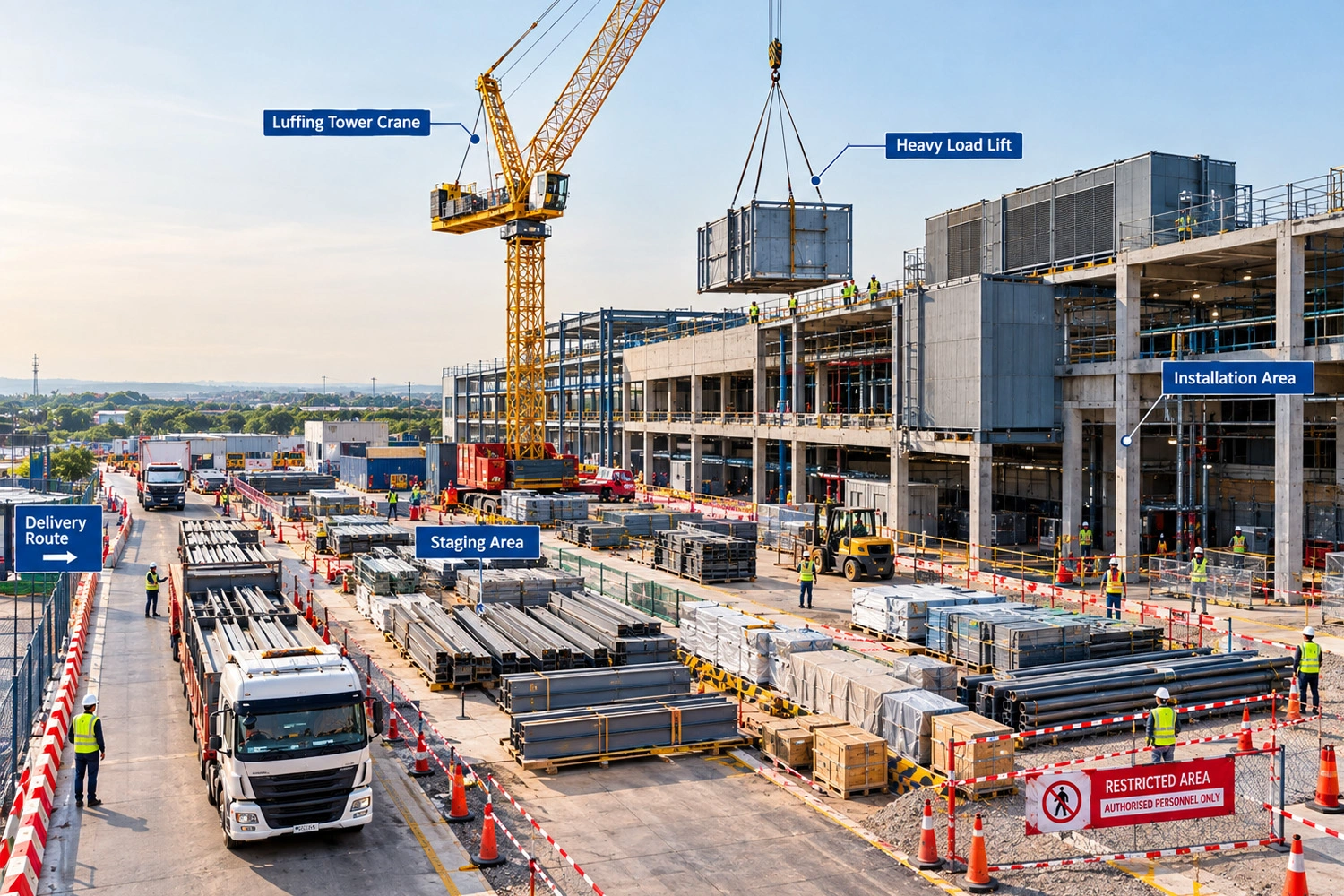
Data center infrastructure involves several construction activities taking place within a controlled project environment. Structural work may progress alongside mechanical, electrical and utility-related installations.
This creates a need for carefully coordinated movement of:
If materials are delivered too early, they may occupy valuable space. If they arrive too late, installation teams may remain idle. Poorly planned movement can also increase double handling and interfere with other contractors working on-site.
Therefore, material movement should be considered during the early stages of data center project management, rather than treated as an operational issue after construction begins.
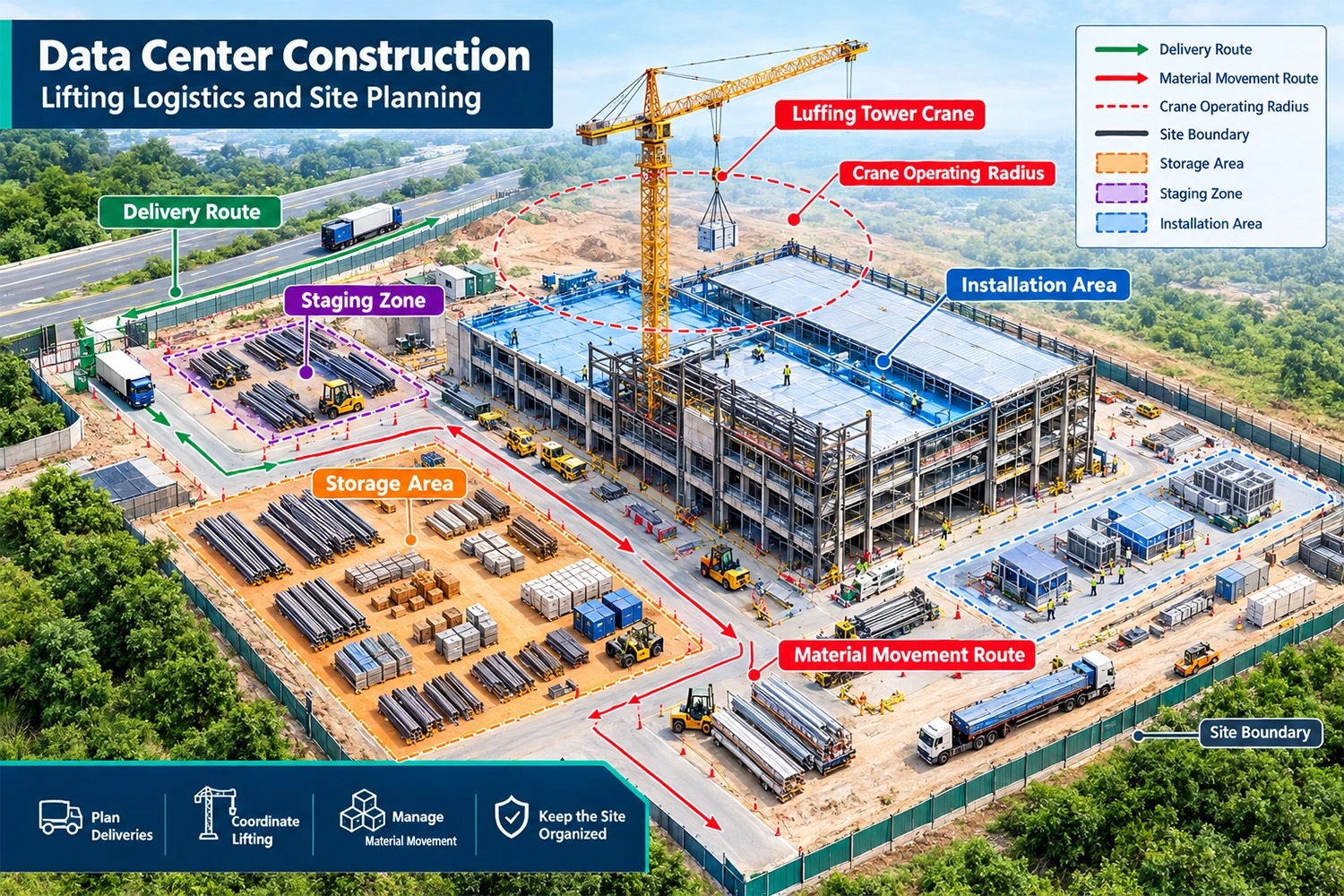
Data center sites may have limited space for storage, vehicle movement and lifting operations. Nearby structures, utility corridors, access roads and temporary facilities can further restrict equipment positioning.
EPC teams should assess:
The most suitable lifting arrangement depends on the actual site layout, load characteristics, working radius and construction sequence.
Mechanical and electrical installations are major components of data center infrastructure. These activities may require the movement of large or heavy equipment into designated areas at specific stages.
Lifting plans should therefore be coordinated with:
A lifting operation that appears practical during the early structural phase may become difficult once equipment rooms, services, access platforms and other permanent elements are installed.
Crane selection for data center construction should be based on more than maximum lifting capacity.
Project teams should evaluate:
Where the site has restricted swing space or nearby structures, a luffing tower crane may be considered because its adjustable jib angle can help control the working radius. However, it is not automatically the right choice for every data center project. The decision should follow a project-specific lifting study.
Orange Machinetech manufactures luffing tower cranes for demanding lifting applications. Its available configurations include capacities ranging from 6 to 50 tonnes, subject to the selected model and operating conditions. Detailed capacity, radius and configuration requirements should be evaluated before final equipment selection.
For a broader understanding of the factors involved in crane positioning, load requirements and site restrictions, EPC teams can refer to Orange’s guide on tower crane planning for high-rise construction.
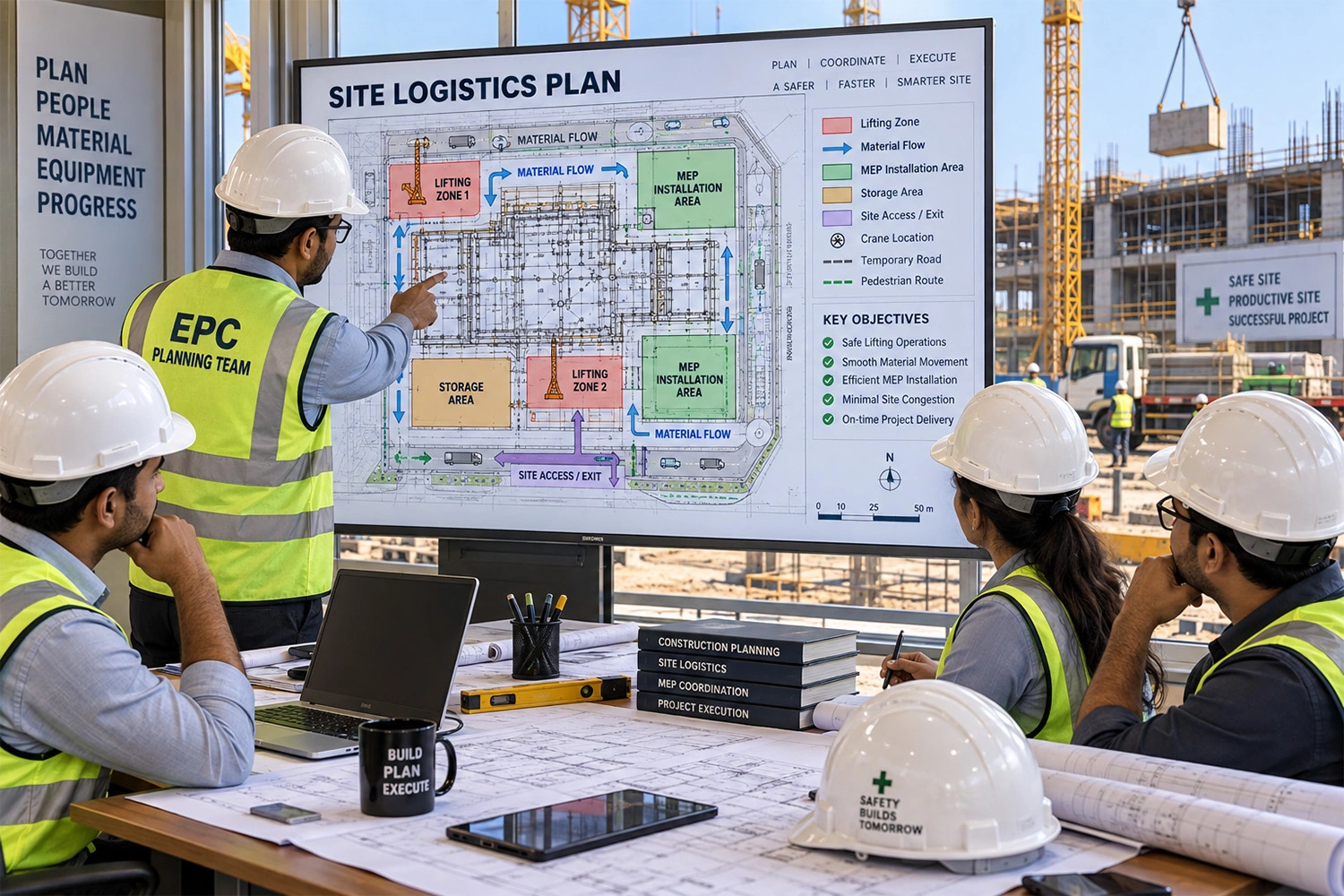
Identify heavy or difficult-to-access loads before construction begins. Their dimensions, weight, delivery method and final installation location should be reviewed during the planning stage.
Materials should be stored and prepared in locations that support the next activity without obstructing access routes, emergency movement or other construction operations.
A delivery should be aligned with the point at which the site can receive, move and install the material. Early delivery is not always efficient if the material must be relocated several times.
Data center projects evolve significantly during construction. The lifting plan should be reviewed when access conditions, building structures, work zones or installation priorities change.
A crane may be operational but still lose productive time because loads are not ready, receiving teams are unavailable or access routes are blocked.
This is why crane performance should be reviewed alongside the broader construction workflow. Orange’s article on tower crane downtime and hidden project delays provides additional context on these operational issues.
Before selecting lifting equipment, EPC teams should answer the following:
These questions help ensure that data center construction equipment is selected according to actual project requirements rather than headline capacity alone.
Successful data center construction requires more than structural execution and equipment procurement. It depends on how effectively materials, people, contractors and lifting resources are coordinated throughout the project.
For EPC teams, early planning of lifting zones, delivery routes, storage areas and installation sequences can help reduce unnecessary handling and avoid preventable delays.
A luffing tower crane may be suitable for certain restricted-site lifting requirements, but the correct solution should always be determined by the project’s load profile, working radius, site conditions and construction sequence.
The objective is simple: make every critical load movement planned, accessible and aligned with the next construction activity.