In high-rise construction, material and manpower movement delays are one of the biggest threats to project timelines. Whether it's a 20-storey commercial tower in Mumbai or a metro project in Delhi, the choice of vertical transport equipment like a construction hoist can accelerate or choke progress.
In this guide, we'll help project planners, EPC contractors, and site managers understand how to choose the right construction lift equipment by improving efficiency and reducing costs.
Manual handling or ill-fitted transport equipment leads to:
A well-chosen construction hoist or elevator can improve:
Equipment Type |
Best For |
Capacity |
Use Case Example |
|---|---|---|---|
| Passenger Hoist | People + light material transport | Up to 3T, 30 people | Tower projects, MEP fitouts, hospitals |
| Construction Hoist | Raw materials only (bricks, blocks) | 500 kg to 2T | Renovation projects, slab work |
| Rack & Pinion Lift | Smooth lifting with safety sensors | 1T-3T | Twin cage systems for high-rise zones |
| Tower Crane | Bulk + precision material lifting | Up to 80T | Steel, concrete formwork, tower slabs |
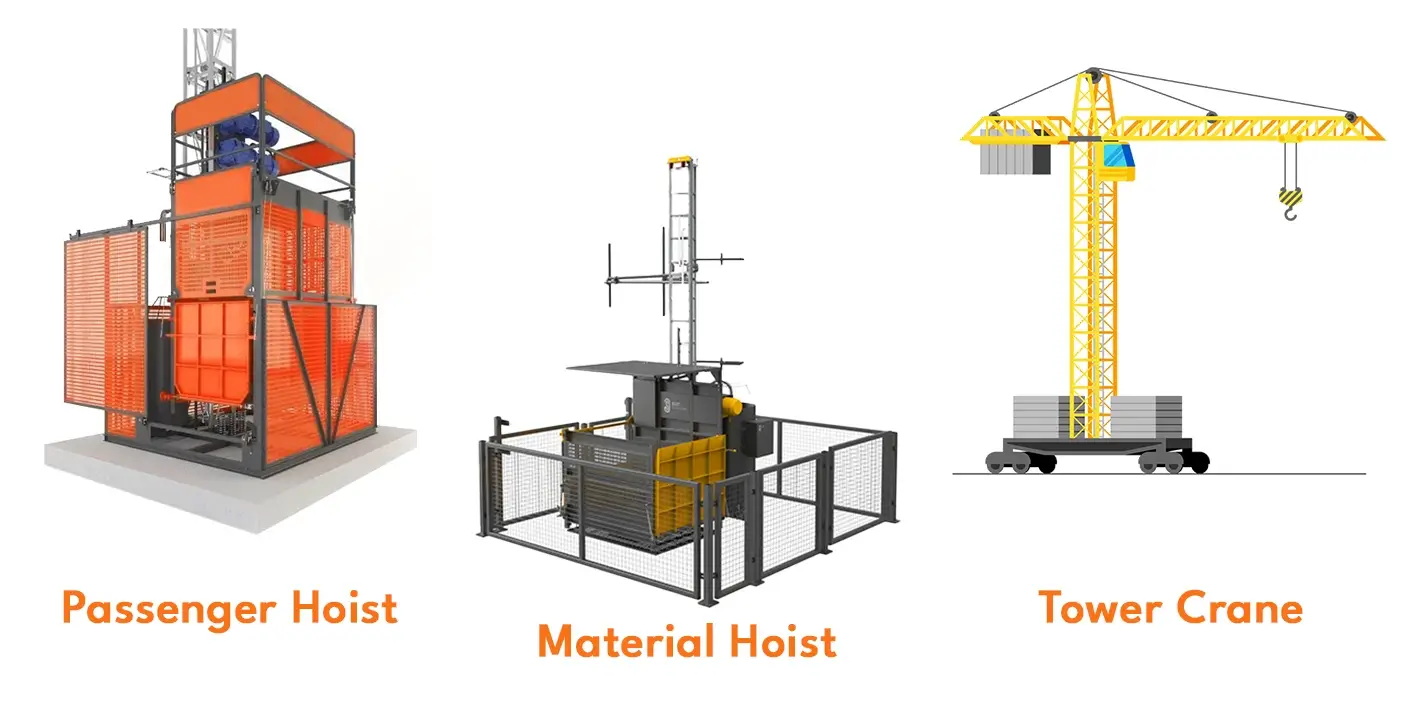
If your site crosses 10+ storeys and has tight access, use rack & pinion passenger hoists.
Short-term sites benefit from modular, pre-certified construction hoist rentals.

Decision Factor |
Decision Factor |
Go for Purchase If |
|---|---|---|
| Project Duration | < 6 months | > 1 year |
| Budget | Limited CAPEX available | Repeated usage across projects |
| Maintenance | You want hassle-free servicing | You have in-house crane/hoist team |
| Site Type | Rooftop or shutdown-based short lifts | Long-term urban infra builds |
When evaluating vertical transport systems, always verify:
Read: Guide to Passenger Hoists for High-Rise Projects in India
In a 25-floor commercial tower in Pune, replacing manual handling + small winches with a twin cage 3T material hoist reduced:
Want a similar solution?
A rack & pinion passenger hoist with CE certification and dual cage is ideal.
Yes, some models are dual-certified for both. Consult supplier for load limits.
35-45 m/min depending on model.
Yes, in rentals certified operators and safety checks are included.
Tower cranes are good for heavy lifting. Hoists are better for continuous vertical movement of people + tools.
Whether you're running a tight metro-site or a 40-floor high-rise, the right vertical transport equipment can cut delays, boost safety, and streamline workflows.
Talk to a Hoist Expert